An interview for Boerderij; an independent weekly magazine for agriculture.
Organic farm NZ27 must be 'lean and mean'
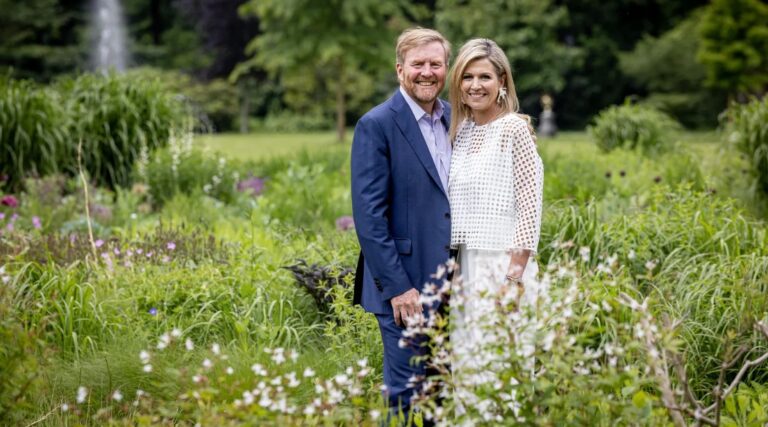
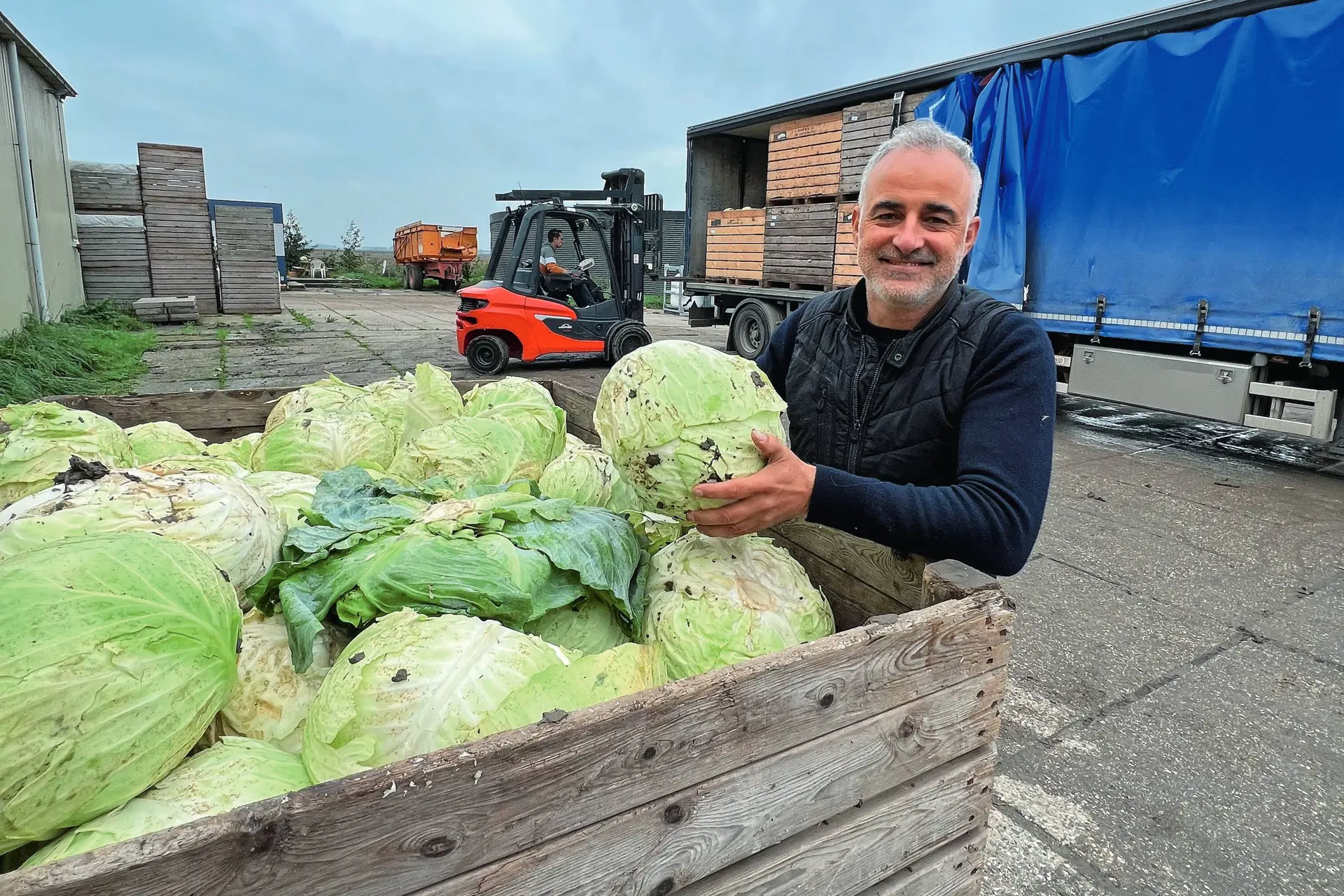
Since the draining in the early 1970s, no chemical agents have ever been used on the organic arable farm NZ27 in Zeewolde. And it is still there. Proof that it is possible, according to director David Egelmeers. This autumn, he received a royal visit to his ‘ancient soils’. An interview by Tineke Hoekstra.
In his story, the king spoke with agricultural entrepreneurs about a ‘niche’, and that bothered Egelmeers: “We are at the forefront of sustainability in the polder and are innovating. 15% of arable farming is organic. I would have liked to have heard that we are not the largest, but certainly not a niche. As host, I was not at the table and could not respond. Too bad, a missed opportunity.”
Two years ago, 55-year-old David Egelmeers took over from Douwe Monsma, who ran the company for more than 30 years and developed it into an economically and ecologically healthy company. It was a logical step, Egelmeers is trained as a biodynamic farmer and has been working in the organic sector for years, both in trade and processing. He earned his spurs at Odin, a cooperative of organic food with a wholesaler and approximately 40 stores. Before that, he ran his own company in Germany for 14 years and supervised organic companies. He also worked at the international brand for biodynamic agriculture, Demeter, in Berlin.
Ancient soils in the Zuiderzee
On the ‘ancient soils’ of the former Zuiderzee, potatoes, onions, pumpkins, peas, beans, cabbage, grass-clover-lucerne, sweetcorn, beetroot, garlic, broccoli, celery and grains are grown on 210 hectares in a biodynamic way – in a crop rotation of 1 in 6 and 1 in 12. Egelmeers: “I notice that as an organic arable farmer you are increasingly going to grow vegetables. You become a vegetable grower.”
The company also specialises in storage, warehousing and sorting. There are two large storage sheds at his farm. A forklift driver drives back and forth with crates for transport. In this period, more than 4,000 crates contain onions, pumpkins, but especially potatoes ready for transport to Agrico. NZ27 processes 8,000 tonnes annually from 50 to 70 growers. Behind the sheds, an endless open plain unfolds, on which windmills turn. There is still beetroot on a plot. Together with four farmers in the area, they process and package most of the crops themselves. Because they have a 25% share in the cultivation company Bio Brass, the chain is short.
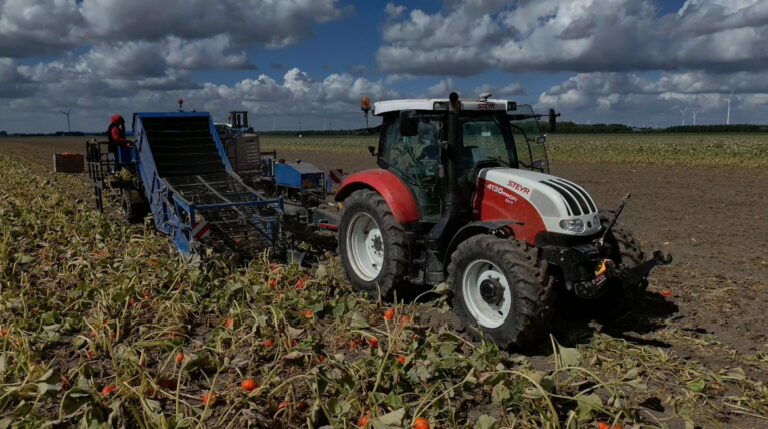
Fully automatic pumpkin harvest
Eight people (six FTEs) work at NZ27. For two months a year, a permanent group of seasonal workers from Romania helps with weeding and bringing in the harvest. The fields are cultivated with weed harrows and hoe bars. In terms of cultivation, they can still do without the use of artificial intelligence (AI).
His most recent purchase is a pumpkin harvesting machine, which automatically picks up the fruits and puts them in the crate itself. It saves 14 workers. Yet for the entrepreneur, innovation is not only in machines, but in even more cooperation in the short chain. Cooperation, it is his leitmotif. The company is Skal, Demeter and GlobalGap certified and carries the PlanetProof quality mark. He passes the audits effortlessly.
Never farmed other than organically
The director has never farmed other than organically. In his younger years, he wanted to improve the world. He does not know what it is like to work with chemical pesticides. And that his crop is different, that there is less yield than at a conventional company, is his frame of reference. He also gets more money for it and ultimately it is about the operating result.
The arable farmer manages NZ27 as a business manager of a small and medium-sized enterprise. To move the company forward, he makes annual plans and financial budgets. “As a farmer and entrepreneur, you want to have a good insight into the figures.” His goal is to make the company future-proof through ‘smart sustainable farming’. The company must become more climate-robust. Be prepared for extreme weather.
With sufficient fallow crops, green manures and soil improvers (repair fertilisation with natural gypsum), the soil is in healthy hands. No neighbour has grass-clover, but he exchanges it for solid manure, with which the soil is fed; circular working through cooperation.
Soil must be even healthier
Yet the soil must be even healthier and more resilient. In the long term, he is looking at water storage and the water-draining capacity of ditches. In addition, he wants to invest even more in nature development, for example with nature-friendly banks. And enrich the yard with greenery, appropriately decorate the open landscape with hedges and trees. “No, it certainly won’t be a forest here,” he states immediately.
No lack of ambition. The company must be more autonomous. There are 1,400 solar panels on the roofs and four windmills on the land, for which they receive profit sharing. Energy storage is something for the future. Even stronger circular, more structured and efficient. ‘Lean and mean’ on all fronts, but then on ‘ancient soil’.